
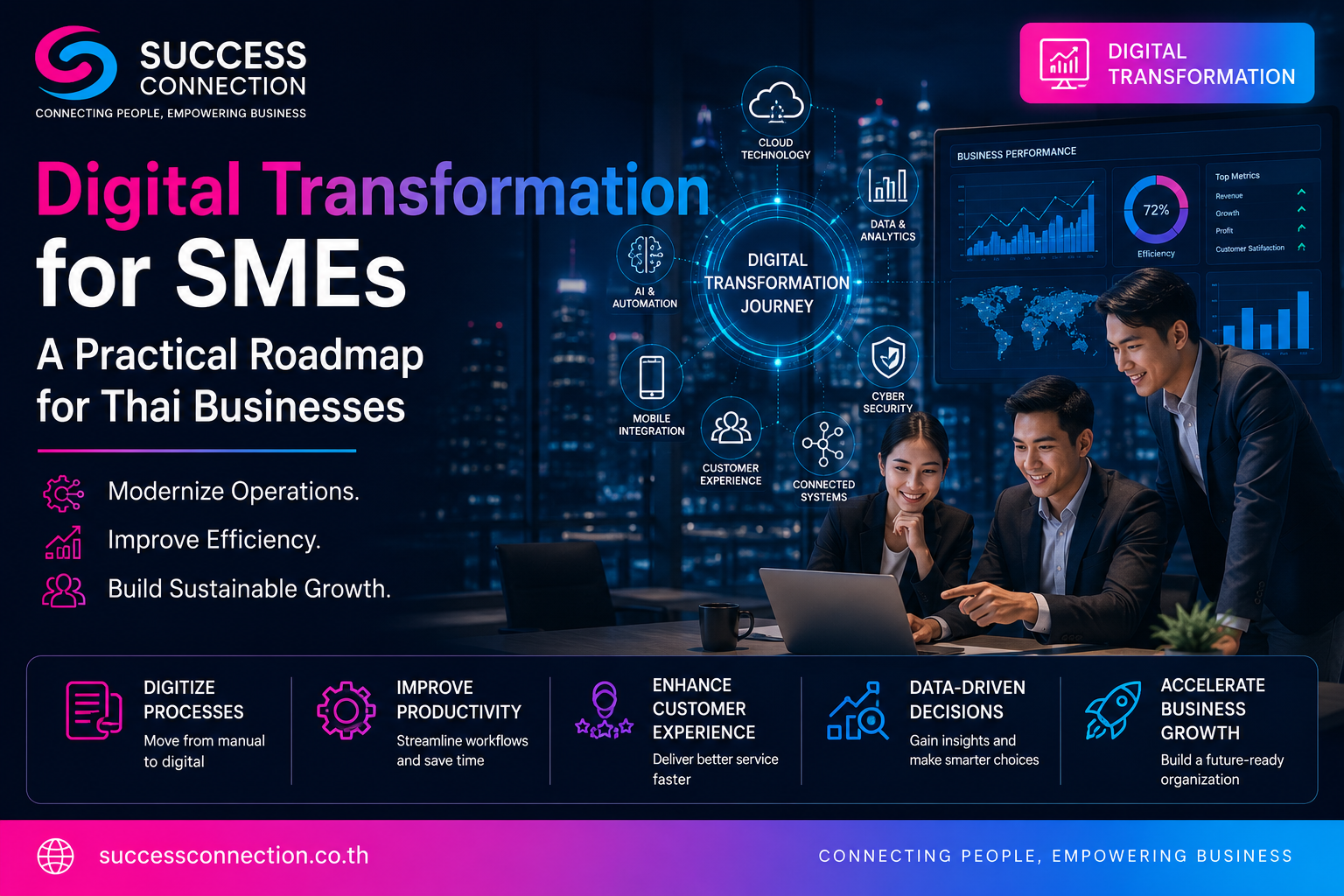
Digital Transformation ไม่ใช่แค่การซื้อซอฟต์แวร์หรือสร้างเว็บไซต์ แต่เป็นการปรับปรุงวิธีการดำเนินงานขององค์กรทั้งหมดผ่านเทคโนโลยี ระบบอัตโนมัติ ข้อมูล และกระบวนการดิจิทัล
สำหรับ SME ไทย การเปลี่ยนผ่านดิจิทัลไม่ใช่ทางเลือกอีกต่อไป แต่เป็นความจำเป็นเพื่อความอยู่รอดและการเติบโตในยุคที่การแข่งขันเข้มข้นขึ้นทุกวัน
Digital Transformation หมายความว่าอะไรจริงๆ
What Digital Transformation Really Means
หลายคนเข้าใจผิดว่า Digital Transformation หมายถึงการซื้อซอฟต์แวร์ใหม่หรือย้ายข้อมูลขึ้น Cloud แต่ในความเป็นจริง Digital Transformation คือการเปลี่ยนแปลงวิธีคิด วิธีทำงาน และวิธีให้บริการลูกค้าโดยใช้เทคโนโลยีดิจิทัลเป็นตัวขับเคลื่อน
ซึ่งรวมถึง:
- การปรับปรุงกระบวนการทำงานให้มีประสิทธิภาพมากขึ้น
- การใช้ข้อมูลในการตัดสินใจแทนสัญชาตญาณ
- การสร้างประสบการณ์ลูกค้าที่ดีขึ้นผ่านช่องทางดิจิทัล
- การนำ Automation มาลดงานซ้ำซ้อน
- การสร้างวัฒนธรรมองค์กรที่พร้อมปรับตัว
ทำไม SME ต้องปรับตัว
Why SMEs Must Adapt
SME หลายแห่งในประเทศไทยยังคงพึ่งพา:
- Spreadsheet แบบ Manual สำหรับจัดการข้อมูล
- Workflow กระดาษและการอนุมัติด้วยมือ
- ระบบที่ไม่เชื่อมต่อกัน ทำให้ข้อมูลกระจัดกระจาย
- การสื่อสารผ่าน LINE/Email โดยไม่มีระบบติดตาม
- การตัดสินใจจากประสบการณ์โดยไม่มี Data สนับสนุน
เมื่อการแข่งขันเพิ่มขึ้น ลูกค้าคาดหวังมากขึ้น และเทคโนโลยีก้าวหน้าเร็วขึ้น องค์กรที่ไม่ปรับตัวจะสูญเสียความสามารถในการแข่งขัน ลูกค้า และบุคลากรที่มีคุณภาพ
นโยบาย Thailand 4.0 ยังผลักดันให้ภาคเอกชนเร่งปรับตัวสู่เศรษฐกิจดิจิทัล ทำให้ Digital Transformation เป็นเรื่องเร่งด่วนยิ่งขึ้น
ความท้าทายที่ SME เผชิญ
Common Challenges Facing SMEs
SME มักเผชิญอุปสรรคในการทำ Digital Transformation ดังนี้:
- งบประมาณจำกัด — ไม่แน่ใจว่าควรลงทุนในเทคโนโลยีใดก่อน
- ขาดบุคลากรด้านดิจิทัล — ไม่มีทีม IT หรือผู้เชี่ยวชาญภายใน
- กลัวการเปลี่ยนแปลง — พนักงานและผู้บริหารไม่พร้อมเปลี่ยน
- ไม่รู้จะเริ่มจากตรงไหน — มีทางเลือกมากเกินไป
- ระบบเดิมไม่รองรับ — Legacy systems ที่ยากต่อการเชื่อมต่อ
ความท้าทายเหล่านี้เป็นเรื่องปกติ แต่สามารถแก้ไขได้ด้วยแผนที่ชัดเจนและการเริ่มต้นจากจุดเล็กๆ
แผน 5 ขั้นตอนสู่ Digital Transformation
The 5-Step Digital Transformation Roadmap
ขั้นตอนที่ 1: ประเมินสถานะปัจจุบัน (Assess Current State)
เริ่มจากการทำความเข้าใจว่าองค์กรอยู่ตรงไหนในปัจจุบัน:
- กระบวนการใดใช้เวลามากที่สุด?
- จุดใดเกิดข้อผิดพลาดบ่อย?
- ข้อมูลใดที่ขาดหายหรือไม่ถูกต้อง?
- ลูกค้าบ่นเรื่องอะไรมากที่สุด?
ขั้นตอนที่ 2: ระบุ Quick Wins (Identify Quick Wins)
เลือกโครงการที่ให้ผลลัพธ์เร็วและใช้งบประมาณน้อย:
- นำ CRM มาจัดการลูกค้าแทน Spreadsheet
- ใช้ระบบเอกสารดิจิทัลแทนกระดาษ
- ย้ายไฟล์ไปยัง Cloud Storage เพื่อเข้าถึงได้ทุกที่
- ตั้งค่า LINE OA Automation สำหรับตอบคำถามเบื้องต้น
- ใช้เครื่องมือ Project Management เช่น Trello หรือ Notion
ขั้นตอนที่ 3: นำ Automation มาใช้ (Implement Automation)
เมื่อได้ Quick Wins แล้ว ขยายผลด้วยการทำ Workflow Automation:
- อัตโนมัติการส่งอีเมลติดตามลูกค้า
- อัตโนมัติการอนุมัติเอกสารภายใน
- เชื่อมต่อระบบต่างๆ เข้าด้วยกัน (Integration)
- สร้าง Automated Reporting
ขั้นตอนที่ 4: ใช้ Data Analytics (Leverage Data Analytics)
เมื่อมีข้อมูลดิจิทัลแล้ว นำมาวิเคราะห์เพื่อ:
- เข้าใจพฤติกรรมลูกค้า
- คาดการณ์ยอดขายและแนวโน้ม
- ระบุจุดที่ต้องปรับปรุง
- วัดผล ROI ของทุกการลงทุน
ขั้นตอนที่ 5: สร้างวัฒนธรรมดิจิทัล (Build Digital Culture)
Digital Transformation ที่ยั่งยืนต้องมี:
- ผู้นำที่สนับสนุนการเปลี่ยนแปลง
- การอบรมพนักงานอย่างต่อเนื่อง
- การเปิดรับ Feedback และปรับปรุงตลอดเวลา
- การให้รางวัลแก่นวัตกรรมและการริเริ่มใหม่ๆ
การแปลงกระบวนการธุรกิจเป็นดิจิทัล
Digitizing Business Processes
กระบวนการที่ควรดิจิทัลเป็นอันดับแรก:
- การขายและการตลาด: ใช้ CRM, Email Marketing, Social Media Management Tools
- การเงินและบัญชี: ระบบออกใบแจ้งหนี้อัตโนมัติ, E-payment, Cloud Accounting
- ทรัพยากรบุคคล: ระบบสมัครงานออนไลน์, Digital Onboarding, E-leave
- การบริการลูกค้า: Ticketing System, Chatbot, Knowledge Base
- การจัดการซัพพลายเชน: Inventory Management, Order Tracking
การใช้ข้อมูลเพื่อตัดสินใจได้ดีขึ้น
Using Data for Better Decisions
องค์กรที่ขับเคลื่อนด้วยข้อมูล (Data-Driven Organization) มีข้อได้เปรียบอย่างมาก:
- เห็นภาพรวมการดำเนินงานแบบ Real-time
- ระบุปัญหาได้ก่อนที่จะลุกลาม
- ตัดสินใจจากข้อเท็จจริง ไม่ใช่ความรู้สึก
- วัดผลทุกกิจกรรมได้อย่างชัดเจน
เครื่องมือที่แนะนำ: Google Analytics, Power BI, Dashboard แบบ Custom, และ Reporting Automation
โอกาสด้าน AI และ Automation
AI and Automation Opportunities
AI เปิดโอกาสใหม่ๆ ให้ SME ที่เคยเป็นไปไม่ได้:
- Chatbots: ตอบคำถามลูกค้า 24/7 โดยไม่ต้องเพิ่มพนักงาน
- ระบบแนะนำ (Recommendation Systems): แนะนำสินค้าหรือบริการที่เหมาะกับลูกค้าแต่ละคน
- การวิเคราะห์ข้อมูลลูกค้า: เข้าใจพฤติกรรมและความต้องการเชิงลึก
- Predictive Analytics: คาดการณ์ยอดขาย, ความต้องการสินค้า, และแนวโน้มตลาด
- Document Processing: อ่านและประมวลผลเอกสารอัตโนมัติ
- Quality Control: ตรวจสอบคุณภาพด้วย Computer Vision
AI ไม่จำเป็นต้องใช้งบมหาศาล — เริ่มจากเครื่องมือที่มีอยู่แล้ว เช่น ChatGPT, Google AI Tools, หรือ LINE OA ที่มีฟีเจอร์ AI ในตัว
การสร้างบุคลากรดิจิทัล
Building a Digital Workforce
เทคโนโลยีจะไม่มีประโยชน์หากบุคลากรไม่พร้อม สิ่งที่ต้องทำ:
- อบรมทักษะดิจิทัล: ตั้งแต่การใช้เครื่องมือพื้นฐานไปจนถึง Data Literacy
- Cybersecurity Awareness: ให้ทุกคนเข้าใจความเสี่ยงด้านความปลอดภัยทางดิจิทัล
- เปลี่ยน Mindset: จากกลัวการเปลี่ยนแปลงเป็นเปิดรับโอกาสใหม่
- สร้าง Digital Champions: มีตัวแทนในแต่ละแผนกที่ช่วยขับเคลื่อน
- เรียนรู้อย่างต่อเนื่อง: จัดสรรเวลาและงบประมาณสำหรับการพัฒนาทักษะ
การวัดความสำเร็จ
Measuring Success
Digital Transformation ต้องวัดผลได้ ตัวชี้วัดสำคัญ:
- KPIs ที่ชัดเจน: กำหนดเป้าหมายที่วัดได้สำหรับทุกโครงการ
- ROI Tracking: ติดตามผลตอบแทนจากทุกการลงทุนดิจิทัล
- Customer Satisfaction: วัดความพึงพอใจของลูกค้าก่อนและหลังการเปลี่ยนแปลง
- Operational Efficiency: เปรียบเทียบเวลาและต้นทุนในกระบวนการที่ปรับปรุง
- Employee Adoption Rate: วัดอัตราการใช้เครื่องมือใหม่ของพนักงาน
- Revenue Growth: ติดตามรายได้ที่เพิ่มขึ้นจากช่องทางดิจิทัล
บทสรุป
Conclusion
Digital Transformation ไม่ใช่โครงการที่ทำครั้งเดียวจบ แต่เป็นกระบวนการที่ต้องทำอย่างต่อเนื่อง
SME ไทยสามารถเริ่มต้นได้ทันทีโดยไม่ต้องรอให้พร้อมทุกอย่าง เริ่มจากจุดเล็กๆ เรียนรู้จากผลลัพธ์ และขยายผลอย่างเป็นระบบ
องค์กรที่เริ่มวันนี้จะมีข้อได้เปรียบเหนือคู่แข่งที่ยังลังเล เพราะทุกวันที่ไม่เปลี่ยนแปลง คือวันที่ถูกทิ้งไว้ข้างหลัง
Digital Transformation is not just about buying software or building a website. It is about fundamentally improving how an organization operates through technology, automation, data, and digital processes.
For Thai SMEs, digital transformation is no longer optional — it is a necessity for survival and growth in an increasingly competitive landscape.
What Digital Transformation Really Means
Many people mistakenly believe Digital Transformation simply means purchasing new software or moving data to the cloud. In reality, it is about changing how you think, how you work, and how you serve customers using digital technology as the driver.
This includes:
- Improving operational processes for greater efficiency
- Using data for decision-making instead of intuition
- Creating better customer experiences through digital channels
- Implementing automation to eliminate repetitive tasks
- Building an organizational culture ready to adapt
Why SMEs Must Adapt
Many SMEs in Thailand still rely on:
- Manual spreadsheets for data management
- Paper-based workflows and manual approvals
- Disconnected systems with scattered data
- Communication through LINE/Email without tracking systems
- Experience-based decisions without supporting data
As competition increases, customer expectations rise, and technology advances rapidly, organizations that fail to adapt will lose their competitive advantage, customers, and quality talent.
Thailand 4.0 policies are also pushing the private sector to accelerate digital transformation, making this an urgent priority for businesses of all sizes.
Common Challenges Facing SMEs
SMEs typically face these obstacles in their digital transformation journey:
- Limited budget — Uncertainty about which technology to invest in first
- Lack of digital talent — No internal IT team or specialists
- Fear of change — Employees and management resistant to transformation
- Not knowing where to start — Too many options available
- Legacy systems — Existing systems that are difficult to integrate
These challenges are normal and can be overcome with a clear roadmap and starting small.
The 5-Step Digital Transformation Roadmap
Step 1: Assess Current State
Begin by understanding where your organization currently stands:
- Which processes consume the most time?
- Where do errors occur most frequently?
- What data is missing or inaccurate?
- What do customers complain about most?
Step 2: Identify Quick Wins
Select projects that deliver fast results with minimal investment:
- Implement a CRM to manage customers instead of spreadsheets
- Use digital document systems to replace paper
- Move files to cloud storage for anywhere access
- Set up LINE OA Automation for basic inquiries
- Adopt project management tools like Trello or Notion
Step 3: Implement Automation
After securing quick wins, expand with workflow automation:
- Automate customer follow-up emails
- Automate internal document approvals
- Integrate different systems together
- Build automated reporting pipelines
Step 4: Leverage Data Analytics
With digital data available, analyze it to:
- Understand customer behavior
- Forecast sales and trends
- Identify areas for improvement
- Measure ROI of every investment
Step 5: Build Digital Culture
Sustainable digital transformation requires:
- Leadership that supports change
- Continuous employee training
- Openness to feedback and constant improvement
- Rewarding innovation and new initiatives
Digitizing Business Processes
Processes to digitize first:
- Sales and Marketing: CRM, Email Marketing, Social Media Management Tools
- Finance and Accounting: Automated invoicing, E-payment, Cloud Accounting
- Human Resources: Online recruitment, Digital Onboarding, E-leave systems
- Customer Service: Ticketing Systems, Chatbots, Knowledge Bases
- Supply Chain: Inventory Management, Order Tracking
Using Data for Better Decisions
Data-driven organizations have significant advantages:
- Real-time visibility into operations
- Early identification of problems before they escalate
- Decisions based on facts, not feelings
- Clear measurement of all activities
Recommended tools: Google Analytics, Power BI, Custom Dashboards, and Reporting Automation.
AI and Automation Opportunities
AI opens new possibilities for SMEs that were previously impossible:
- Chatbots: Answer customer questions 24/7 without adding staff
- Recommendation Systems: Suggest products or services tailored to each customer
- Customer Data Analysis: Deep understanding of behavior and needs
- Predictive Analytics: Forecast sales, demand, and market trends
- Document Processing: Automated reading and processing of documents
- Quality Control: Computer Vision-based quality inspection
AI does not require a massive budget — start with existing tools like ChatGPT, Google AI Tools, or LINE OA with built-in AI features.
Building a Digital Workforce
Technology is useless if people are not ready. Key actions include:
- Digital skills training: From basic tool usage to data literacy
- Cybersecurity Awareness: Ensure everyone understands digital security risks
- Mindset shift: From fearing change to embracing new opportunities
- Digital Champions: Representatives in each department to drive adoption
- Continuous learning: Allocate time and budget for skills development
Measuring Success
Digital Transformation must be measurable. Key metrics include:
- Clear KPIs: Set measurable goals for every project
- ROI Tracking: Monitor returns on every digital investment
- Customer Satisfaction: Measure satisfaction before and after changes
- Operational Efficiency: Compare time and cost in improved processes
- Employee Adoption Rate: Measure usage of new tools by staff
- Revenue Growth: Track revenue increases from digital channels
Conclusion
Digital Transformation is not a one-time project but an ongoing process of continuous improvement.
Thai SMEs can start immediately without waiting for everything to be perfect. Start small, learn from results, and scale systematically.
Organizations that begin today will have an advantage over competitors who hesitate, because every day without change is a day of falling behind.