
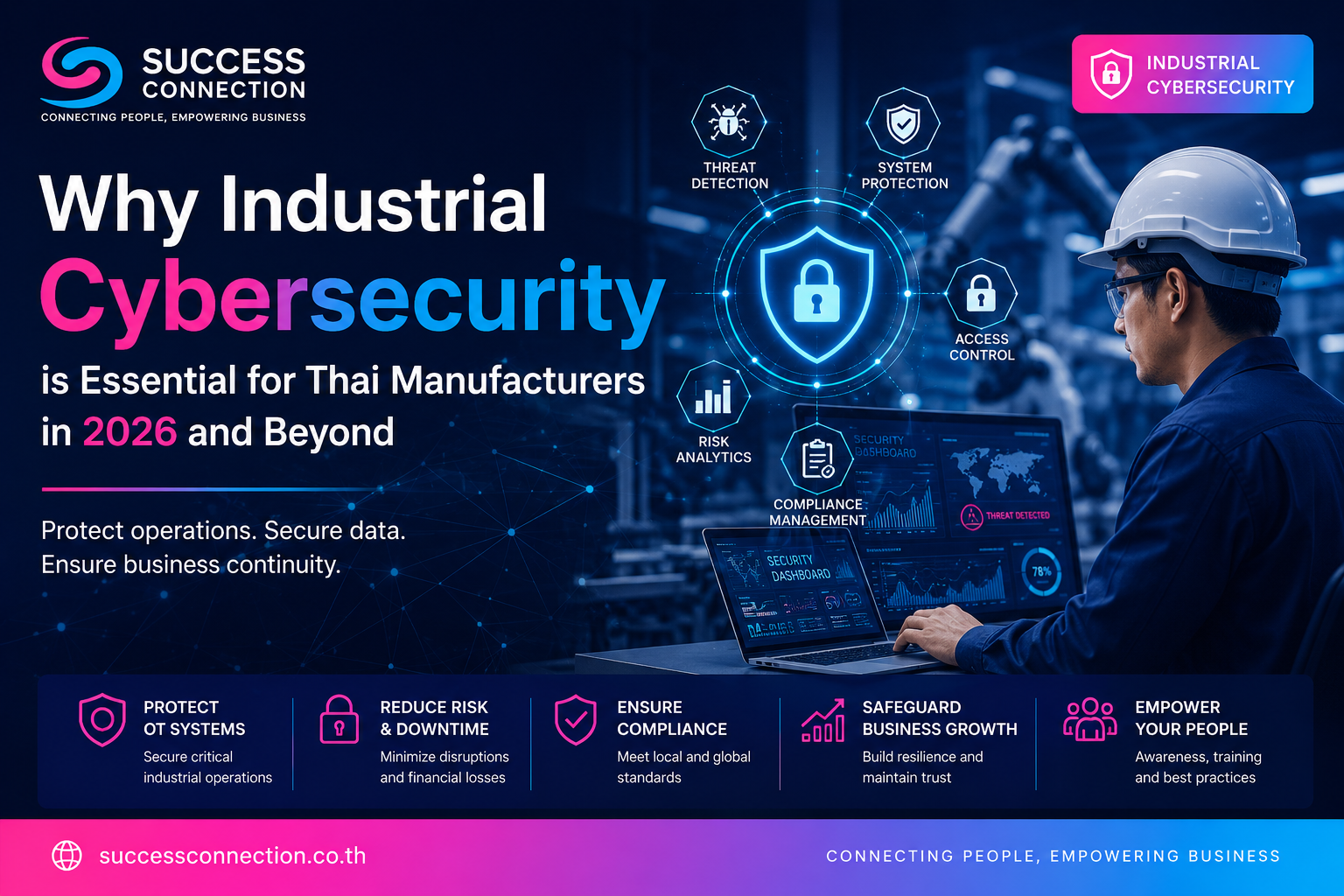
ภาคการผลิตและอุตสาหกรรมของประเทศไทยกำลังเข้าสู่การเปลี่ยนแปลงทางดิจิทัลอย่างรวดเร็ว โรงงานอัจฉริยะ สายการผลิตที่เชื่อมต่อกัน ระบบคลาวด์ การตรวจสอบระยะไกล และระบบปฏิบัติการที่ขับเคลื่อนด้วย AI กำลังกลายเป็นเรื่องปกติมากขึ้นเรื่อยๆ
แม้เทคโนโลยีเหล่านี้จะสร้างโอกาสมากมาย แต่ก็นำมาซึ่งความเสี่ยงด้านไซเบอร์ซีเคียวริตี้ใหม่ๆ
หลายองค์กรยังคงเชื่อว่าการโจมตีทางไซเบอร์มุ่งเป้าเฉพาะองค์กรขนาดใหญ่เท่านั้น แต่แนวโน้มปัจจุบันแสดงให้เห็นว่า SME กำลังกลายเป็นเป้าหมายหลักมากขึ้นเรื่อยๆ เนื่องจากมักมีระบบควบคุมความปลอดภัยที่อ่อนแอกว่าและความตระหนักรู้ด้านไซเบอร์ที่จำกัด
ภูมิทัศน์ภัยคุกคามที่เติบโตขึ้น
The Growing Threat Landscape
องค์กรอุตสาหกรรมในปัจจุบันต้องเผชิญกับภัยคุกคาม ได้แก่:
- การโจมตีด้วย Ransomware (มัลแวร์เรียกค่าไถ่)
- แคมเปญ Phishing (ฟิชชิง)
- การเข้าถึงระบบโดยไม่ได้รับอนุญาต
- ช่องโหว่ในห่วงโซ่อุปทาน (Supply Chain Vulnerabilities)
- ภัยคุกคามจากภายในองค์กร (Insider Threats)
- ความเสี่ยงด้านความปลอดภัยของเทคโนโลยีปฏิบัติการ (OT Security Risks)
เหตุการณ์ไซเบอร์ที่ประสบความสำเร็จเพียงครั้งเดียวสามารถหยุดชะงักการผลิต ทำลายชื่อเสียง และสร้างความสูญเสียทางการเงินอย่างมหาศาล
ทำไมบริษัทผู้ผลิตถึงมีความเสี่ยง
Why Manufacturing Companies Are Vulnerable
สภาพแวดล้อมการผลิตมักรวมเอาสิ่งต่างๆ เข้าด้วยกัน:
- อุปกรณ์อุตสาหกรรมรุ่นเก่า (Legacy Equipment)
- ระบบ IT สมัยใหม่
- อุปกรณ์ที่เชื่อมต่ออินเทอร์เน็ต (IoT)
- ผู้ให้บริการภายนอก (Third-party Vendors)
- เทคโนโลยีการเข้าถึงระยะไกล (Remote Access)
หากไม่มีการควบคุมความปลอดภัยไซเบอร์ที่เหมาะสม ระบบเหล่านี้จะสร้างจุดเข้าถึงหลายจุดสำหรับผู้โจมตี
Cybersecurity ไม่ใช่แค่เรื่องของฝ่าย IT อีกต่อไป
Cybersecurity Is No Longer Just an IT Issue
Cybersecurity ส่งผลกระทบต่อ:
- การดำเนินงาน (Operations)
- ความต่อเนื่องของการผลิต (Production Continuity)
- ความเชื่อมั่นของลูกค้า (Customer Trust)
- การปฏิบัติตามกฎระเบียบ (Regulatory Compliance)
- ชื่อเสียงทางธุรกิจ (Business Reputation)
- การปกป้องรายได้ (Revenue Protection)
ด้วยเหตุนี้ ความตระหนักรู้ด้านไซเบอร์จึงต้องขยายออกไปนอกเหนือจากแผนก IT และรวมถึงผู้บริหาร ทีม HR ฝ่ายปฏิบัติการ และพนักงานแนวหน้า
ขั้นตอนแรกที่ปฏิบัติได้จริงสำหรับ SME
Practical First Steps for SMEs
องค์กรควรเริ่มต้นด้วย:
- จัดอบรมความตระหนักรู้ด้าน Cybersecurity (Awareness Training)
- ทบทวนนโยบายรหัสผ่าน (Password Policies)
- ใช้งานการยืนยันตัวตนหลายปัจจัย (Multi-Factor Authentication)
- สำรองข้อมูลระบบสำคัญ (Backup Critical Systems)
- ทบทวนสิทธิ์การเข้าถึง (Access Permissions)
- ประเมินความเสี่ยงจากบุคคลที่สาม (Third-party Risks)
- พัฒนาขั้นตอนรับมือเหตุการณ์ (Incident Response Procedures)
การดำเนินการพื้นฐานเหล่านี้ลดความเสี่ยงขององค์กรได้อย่างมีนัยสำคัญ
การสร้างวัฒนธรรม Security-First
Building a Security-First Culture
เทคโนโลยีเพียงอย่างเดียวไม่สามารถแก้ปัญหาความท้าทายด้าน Cybersecurity ได้
พนักงานคือแนวป้องกันด่านแรก
องค์กรที่ลงทุนในการสร้างความตระหนักรู้ด้าน Cybersecurity และการศึกษาพัฒนาบุคลากร มักจะมีความยืดหยุ่นระยะยาวที่แข็งแกร่งกว่าองค์กรที่พึ่งพาเฉพาะเทคโนโลยี
บทสรุป / Conclusion
Industrial Cybersecurity ไม่ใช่ทางเลือกอีกต่อไป
ในขณะที่ประเทศไทยเดินหน้าสู่การเปลี่ยนแปลงทางดิจิทัล องค์กรที่ปรับปรุงความตระหนักรู้ด้าน Cybersecurity ธรรมาภิบาล และความยืดหยุ่นในการดำเนินงานอย่างเชิงรุก จะมีตำแหน่งที่ดีกว่าสำหรับการเติบโตอย่างยั่งยืน
การปกป้องทรัพย์สินดิจิทัลคือการปกป้องความต่อเนื่องทางธุรกิจ
Thailand's manufacturing and industrial sectors are undergoing rapid digital transformation. Smart factories, connected production lines, cloud-based systems, remote monitoring, and AI-powered operations are becoming increasingly common.
While these technologies create significant opportunities, they also introduce new cybersecurity risks.
Many organizations still believe cyber attacks only target large enterprises. Unfortunately, current trends show that SMEs are increasingly becoming primary targets because they often have weaker security controls and limited cybersecurity awareness.
The Growing Threat Landscape
Industrial organizations now face threats including:
- Ransomware attacks
- Phishing campaigns
- Unauthorized system access
- Supply chain vulnerabilities
- Insider threats
- Operational technology (OT) security risks
A single successful cyber incident can disrupt production, damage reputation, and create significant financial losses.
Why Manufacturing Companies Are Vulnerable
Manufacturing environments frequently combine:
- Legacy industrial equipment
- Modern IT systems
- Internet-connected devices
- Third-party vendors
- Remote access technologies
Without proper cybersecurity controls, these systems create multiple entry points for attackers.
Cybersecurity Is No Longer Just an IT Issue
Cybersecurity now impacts:
- Operations
- Production continuity
- Customer trust
- Regulatory compliance
- Business reputation
- Revenue protection
For this reason, cybersecurity awareness must extend beyond the IT department and include executives, HR teams, operations staff, and frontline employees.
Practical First Steps for SMEs
Organizations should begin by:
- Conducting cybersecurity awareness training
- Reviewing password policies
- Implementing multi-factor authentication
- Backing up critical systems
- Reviewing access permissions
- Assessing third-party risks
- Developing incident response procedures
These foundational actions significantly reduce organizational risk.
Building a Security-First Culture
Technology alone cannot solve cybersecurity challenges.
Employees remain the first line of defense.
Organizations that invest in cybersecurity awareness and workforce education often achieve stronger long-term resilience than those relying solely on technology solutions.
Conclusion
Industrial Cybersecurity is no longer optional.
As Thailand continues its digital transformation journey, organizations that proactively improve cybersecurity awareness, governance, and operational resilience will be better positioned for sustainable growth.
Protecting digital assets is ultimately protecting business continuity.