
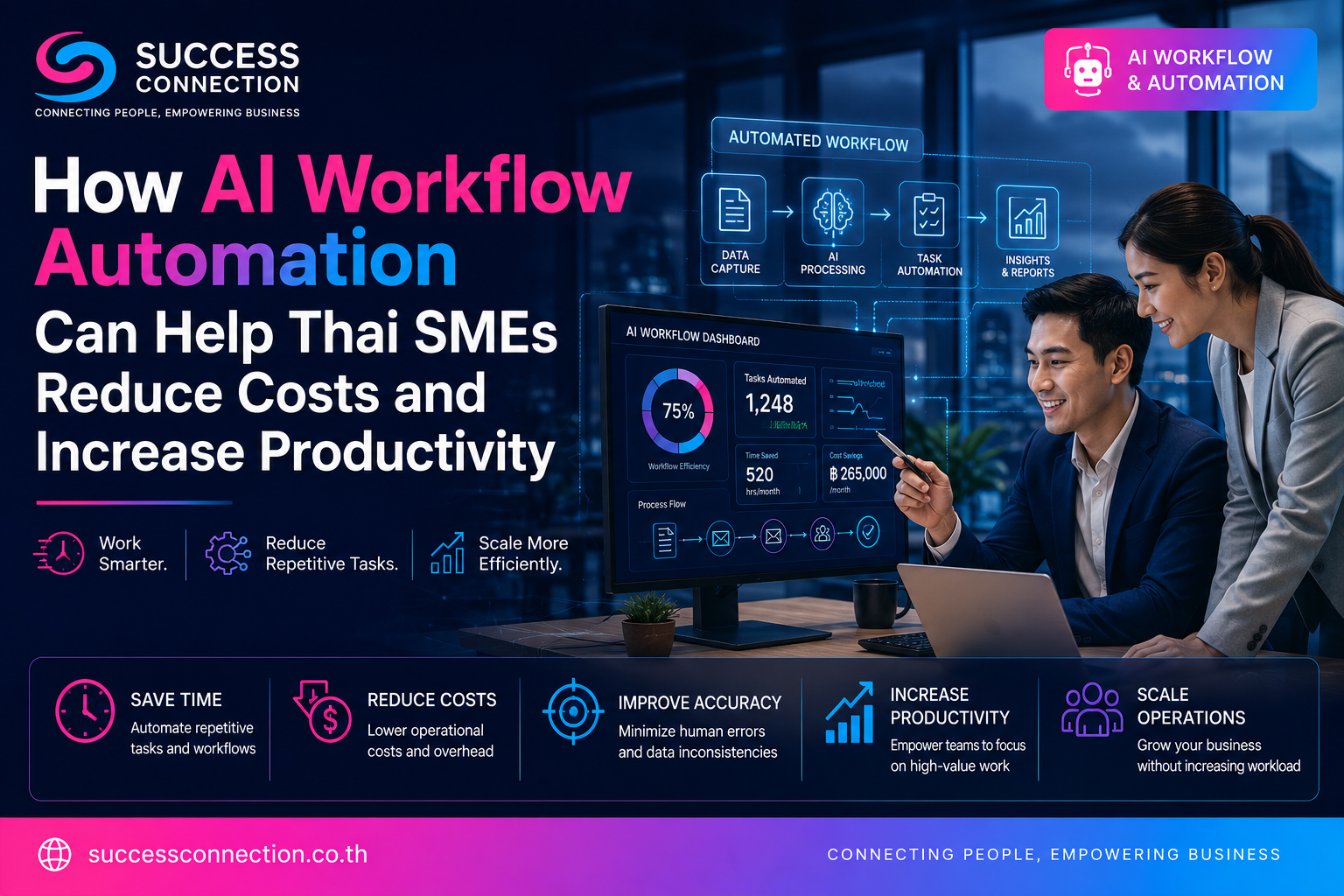
ปัญญาประดิษฐ์ (AI) ไม่ได้สงวนไว้สำหรับองค์กรขนาดใหญ่อีกต่อไป
ปัจจุบัน SME ทั่วประเทศไทยสามารถใช้เครื่องมือ AI Workflow Automation ที่ราคาไม่แพงเพื่อปรับปรุงการดำเนินงาน ลดภาระงานธุรการ และยกระดับผลการดำเนินงานทางธุรกิจโดยรวม
เมื่อการแข่งขันเพิ่มขึ้นและทรัพยากรยังคงมีจำกัด ระบบอัตโนมัติจึงเป็นเส้นทางที่ปฏิบัติได้จริงสู่การเติบโตอย่างยั่งยืน
AI Workflow Automation คืออะไร?
What Is AI Workflow Automation?
AI Workflow Automation หมายถึงการใช้ซอฟต์แวร์ ปัญญาประดิษฐ์ และกระบวนการดิจิทัลเพื่อทำให้งานธุรกิจที่ทำซ้ำๆ เป็นระบบอัตโนมัติ
ตัวอย่างเช่น:
- การป้อนข้อมูล (Data Entry)
- การประมวลผลเอกสาร (Document Processing)
- การจัดการ Lead (Lead Management)
- การตอบคำถามลูกค้า (Customer Inquiries)
- การตอบอีเมล (Email Responses)
- การนัดหมาย (Appointment Scheduling)
- รายงานและการวิเคราะห์ (Reporting & Analytics)
- การคัดกรองผู้สมัครงาน (Recruitment Screening)
แทนที่จะต้องมีคนเข้ามาจัดการในทุกขั้นตอน Workflow อัตโนมัติสามารถจัดการกิจกรรมที่เป็นงานประจำได้อย่างรวดเร็วและสม่ำเสมอ
ทำไม SME ถึงมีปัญหาด้านประสิทธิภาพการดำเนินงาน
Why SMEs Struggle With Operational Efficiency
SME หลายแห่งยังคงพึ่งพา:
- Spreadsheet แบบ Manual
- เอกสารกระดาษ
- การป้อนข้อมูลซ้ำซ้อน
- การอนุมัติผ่านอีเมล
- ระบบหลายตัวที่ไม่เชื่อมต่อกัน
เมื่อธุรกิจเติบโต กระบวนการเหล่านี้มักกลายเป็นคอขวด (Bottleneck)
ผลที่ตามมาคือ:
- ผลผลิตที่หายไป (Lost Productivity)
- ต้นทุนแรงงานที่สูงขึ้น (Higher Labor Costs)
- ข้อผิดพลาดจากมนุษย์ที่เพิ่มขึ้น (Human Error)
- เวลาตอบสนองลูกค้าที่ช้าลง (Slower Response Times)
ประโยชน์หลักของ AI Workflow Automation
Key Benefits of AI Workflow Automation
1. ลดต้นทุนธุรการ (Reduce Administrative Costs)
ระบบอัตโนมัติช่วยกำจัดงานซ้ำซ้อนและลดความจำเป็นในการประมวลผลด้วยมือที่มากเกินไป พนักงานสามารถมุ่งเน้นไปที่กิจกรรมที่มีมูลค่าสูงแทนงานธุรการประจำวัน
2. ปรับปรุงผลผลิต (Improve Productivity)
กระบวนการที่เคยใช้เวลาหลายชั่วโมง สามารถทำเสร็จภายในไม่กี่นาที ทีมงานมีประสิทธิภาพมากขึ้นและสามารถจัดการปริมาณงานที่มากขึ้น
3. เพิ่มความถูกต้อง (Increase Accuracy)
ระบบอัตโนมัติช่วยลด:
- ข้อผิดพลาดจากการพิมพ์
- ข้อมูลซ้ำซ้อน
- ข้อมูลที่ขาดหายไป
- กระบวนการที่ไม่สม่ำเสมอ
4. ตัดสินใจได้เร็วขึ้น (Faster Decision Making)
Dashboard ที่ขับเคลื่อนด้วย AI ให้การมองเห็นแบบ Real-time ต่อการดำเนินงาน ผู้บริหารสามารถระบุปัญหาและโอกาสได้รวดเร็วยิ่งขึ้น
5. ประสบการณ์ลูกค้าที่ดีขึ้น (Better Customer Experience)
การตอบสนองที่เร็วขึ้นและ Workflow ที่คล่องตัวช่วยเพิ่มความพึงพอใจของลูกค้าและเสริมสร้างความสัมพันธ์
โอกาสในการทำ Automation ที่ปฏิบัติได้จริงสำหรับ SME
Practical Automation Opportunities for SMEs
องค์กรสามารถเริ่มต้นด้วย:
- ระบบตอบคำถามลูกค้าอัตโนมัติ (Customer Inquiry Automation)
- CRM Workflows
- HR Onboarding
- การประมวลผลการสรรหาบุคลากร (Recruitment Processing)
- การอนุมัติเอกสาร (Document Approvals)
- การติดตามสินค้าคงคลัง (Inventory Tracking)
- งานบัญชีสนับสนุน (Accounting Support)
- การจัดการ Sales Pipeline
การปรับปรุงเล็กๆ น้อยๆ มักสร้างผลลัพธ์ที่มีนัยสำคัญต่อการดำเนินงาน
AI จะไม่มาแทนที่คน
AI Will Not Replace People
หนึ่งในความเข้าใจผิดที่พบบ่อยคือ AI จะมาแทนที่พนักงาน
ในความเป็นจริง องค์กรที่ประสบความสำเร็จใช้ AI เพื่อสนับสนุนคนโดยกำจัดงานซ้ำซ้อนและให้พนักงานมุ่งเน้นไปที่การแก้ปัญหา การบริการลูกค้า ความคิดสร้างสรรค์ และการเติบโตทางธุรกิจ
AI ควรถูกมองเป็นตัวคูณผลผลิต (Productivity Multiplier) ไม่ใช่ตัวแทนที่
บทสรุป / Conclusion
AI Workflow Automation กำลังกลายเป็นหนึ่งในการลงทุนที่คุ้มค่าที่สุดสำหรับ SME
ธุรกิจที่ทำ Automation อย่างชาญฉลาดสามารถลดต้นทุน ปรับปรุงประสิทธิภาพ เพิ่มผลผลิต และวางตำแหน่งตัวเองสำหรับการเติบโตระยะยาวในเศรษฐกิจดิจิทัลที่เพิ่มขึ้น
องค์กรที่เริ่มต้นเร็วจะได้เปรียบทางการแข่งขันอย่างมีนัยสำคัญ
Artificial Intelligence is no longer reserved for large corporations.
Today, SMEs across Thailand can leverage affordable AI-powered workflow automation tools to streamline operations, reduce administrative workloads, and improve overall business performance.
As competition increases and resources remain limited, automation provides a practical path toward sustainable growth.
What Is AI Workflow Automation?
AI Workflow Automation refers to the use of software, artificial intelligence, and digital processes to automate repetitive business tasks.
Examples include:
- Data entry
- Document processing
- Lead management
- Customer inquiries
- Email responses
- Appointment scheduling
- Reporting and analytics
- Recruitment screening
Instead of requiring manual intervention at every step, automated workflows can handle routine activities quickly and consistently.
Why SMEs Struggle With Operational Efficiency
Many SMEs rely heavily on:
- Manual spreadsheets
- Paper documents
- Repeated data entry
- Email-based approvals
- Multiple disconnected systems
As businesses grow, these processes often become bottlenecks.
The result is:
- Lost productivity
- Higher labor costs
- Increased human error
- Slower customer response times
Key Benefits of AI Workflow Automation
1. Reduce Administrative Costs
Automation eliminates repetitive tasks and reduces the need for excessive manual processing. Employees can focus on higher-value activities instead of routine administrative work.
2. Improve Productivity
Processes that previously required hours can often be completed within minutes. Teams become more efficient and capable of handling larger workloads.
3. Increase Accuracy
Automated systems help reduce:
- Typing errors
- Duplicate records
- Missing information
- Inconsistent processes
4. Faster Decision Making
AI-powered dashboards provide real-time visibility into business operations. Managers can identify issues and opportunities more quickly.
5. Better Customer Experience
Faster responses and streamlined workflows improve customer satisfaction and strengthen relationships.
Practical Automation Opportunities for SMEs
Organizations can begin with:
- Customer inquiry automation
- CRM workflows
- HR onboarding
- Recruitment processing
- Document approvals
- Inventory tracking
- Accounting support
- Sales pipeline management
Small improvements often generate significant operational gains.
AI Will Not Replace People
One common misconception is that AI replaces employees.
In reality, successful organizations use AI to support people by removing repetitive tasks and allowing employees to focus on problem solving, customer service, creativity, and business growth.
AI should be viewed as a productivity multiplier rather than a replacement.
Conclusion
AI Workflow Automation is becoming one of the most practical investments available to SMEs.
Businesses that automate intelligently can reduce costs, improve efficiency, increase productivity, and position themselves for long-term growth in an increasingly digital economy.
Organizations that start early will gain a significant competitive advantage.