
ภาคการผลิตไทยกำลังเปลี่ยนแปลง AI ไม่ใช่อนาคตอีกต่อไป แต่เป็นปัจจุบัน
ในปี 2026 ผู้ผลิตทั่วประเทศไทยกำลังนำ AI Automation มาใช้เพื่อปรับปรุงคุณภาพ ลดเวลาหยุดเครื่อง เพิ่มผลผลิต และเสริมสร้างความสามารถในการแข่งขัน
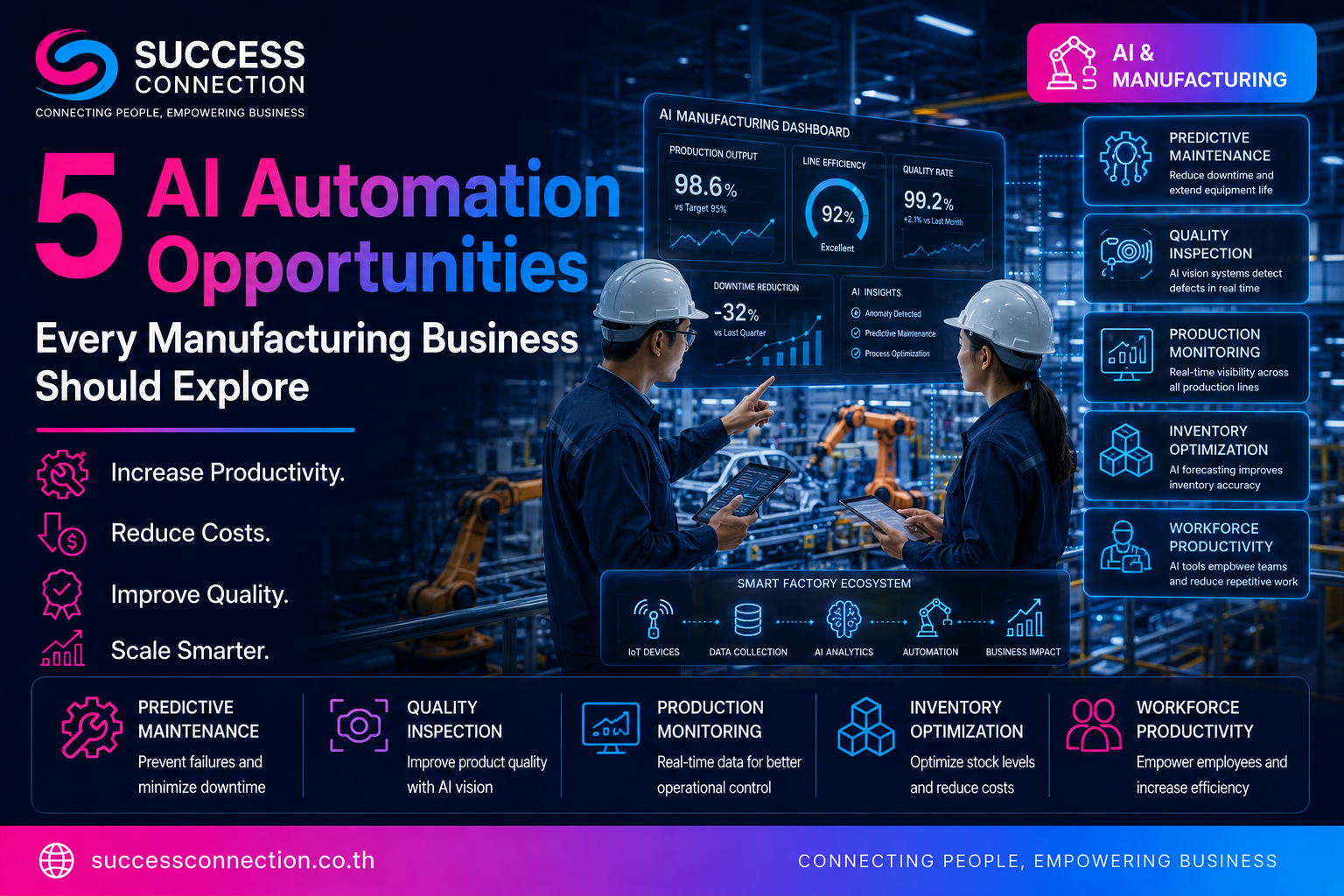
บทความนี้จะนำเสนอ 5 โอกาส AI Automation ที่ธุรกิจการผลิตทุกแห่งควรสำรวจ พร้อมแนวทางปฏิบัติจริงที่เริ่มต้นได้ทันที
1. การบำรุงรักษาเชิงคาดการณ์ (Predictive Maintenance)
Predictive Maintenance
การหยุดเครื่องจักรโดยไม่คาดคิดเป็นหนึ่งในต้นทุนที่สูงที่สุดของอุตสาหกรรมการผลิต AI สามารถช่วยคาดการณ์ความล้มเหลวก่อนที่จะเกิดขึ้น
ประโยชน์หลัก:
- ลด Downtime ที่ไม่ได้วางแผน 30-50%
- ยืดอายุการใช้งานอุปกรณ์ 20-40%
- ลดค่าใช้จ่ายซ่อมฉุกเฉิน
- วางแผนการบำรุงรักษาได้แม่นยำขึ้น
ระบบ AI วิเคราะห์ข้อมูลจากเซ็นเซอร์ (Vibration, Temperature, Pressure) เพื่อตรวจจับรูปแบบที่ผิดปกติและแจ้งเตือนล่วงหน้า ทำให้ทีมบำรุงรักษาสามารถจัดการปัญหาก่อนที่จะกลายเป็นวิกฤต
2. การตรวจสอบคุณภาพด้วย AI (AI-Powered Quality Inspection)
AI-Powered Quality Inspection
Computer Vision และ Machine Learning สามารถตรวจจับข้อบกพร่องในสายการผลิตแบบ Real-time ด้วยความแม่นยำสูงกว่าการตรวจสอบด้วยสายตามนุษย์
ความสามารถหลัก:
- ตรวจจับข้อบกพร่องแบบ Real-time บนสายการผลิต
- ลดของเสีย (Waste) 20-40%
- ความแม่นยำในการตรวจจับสูงถึง 99%+
- ทำงาน 24/7 โดยไม่เหนื่อยล้า
- เก็บข้อมูลคุณภาพเพื่อวิเคราะห์แนวโน้ม
การตรวจสอบคุณภาพด้วย AI ช่วยให้ผู้ผลิตสามารถรักษามาตรฐานคุณภาพที่สม่ำเสมอในขณะที่ลดต้นทุนจากการ Rework และ Return
3. การติดตามการผลิตและวิเคราะห์ข้อมูล (Production Monitoring & Analytics)
Production Monitoring & Analytics
Dashboard แบบ Real-time ที่ขับเคลื่อนด้วย AI ให้การมองเห็นสถานะการผลิตทั้งหมดในที่เดียว
ฟีเจอร์สำคัญ:
- OEE (Overall Equipment Effectiveness) Tracking แบบ Real-time
- ระบุ Bottleneck ในสายการผลิตโดยอัตโนมัติ
- วิเคราะห์ Root Cause ของปัญหาการผลิต
- แจ้งเตือนเมื่อประสิทธิภาพต่ำกว่าเป้าหมาย
- รายงานและ KPI Dashboard สำหรับผู้บริหาร
ผู้จัดการโรงงานสามารถตัดสินใจได้รวดเร็วขึ้นบนฐานข้อมูลจริง แทนที่จะพึ่งพาการรายงานที่ล่าช้าหรือความรู้สึก
4. การเพิ่มประสิทธิภาพสินค้าคงคลัง (Inventory Optimization)
Inventory Optimization
AI Forecasting ช่วยให้การจัดการสินค้าคงคลังมีความแม่นยำมากขึ้น ลดทั้งสต๊อกส่วนเกินและการขาดแคลนวัตถุดิบ
ผลลัพธ์ที่คาดหวัง:
- ลดสต๊อกส่วนเกิน 20-35%
- ลดการขาดแคลนวัตถุดิบ (Stockouts) 70-80%
- ปรับปรุง Cash Flow ด้วยการลดเงินทุนจม
- คาดการณ์ความต้องการตามฤดูกาลและแนวโน้มตลาด
- Automated Reorder Points ตาม AI Prediction
การจัดการสินค้าคงคลังที่ดีขึ้นส่งผลโดยตรงต่อกำไรสุทธิของธุรกิจการผลิต
5. การเพิ่มผลผลิตบุคลากร (Workforce Productivity Enhancement)
Workforce Productivity Enhancement
AI ไม่ได้มาแทนที่พนักงาน แต่ช่วยให้พนักงานทำงานได้ดีขึ้น เร็วขึ้น และมีความผิดพลาดน้อยลง
แนวทางการใช้ AI สนับสนุนบุคลากร:
- AI-assisted Work Instructions สำหรับพนักงานใหม่
- Smart Scheduling ที่จัดสรรกำลังคนตามปริมาณงาน
- Digital Training ที่ปรับเนื้อหาตามระดับความรู้
- Automated Reporting ที่ลดเวลางานเอกสาร
- AI Safety Monitoring เพื่อป้องกันอุบัติเหตุ
เมื่อพนักงานได้รับเครื่องมือที่ถูกต้อง ผลผลิตต่อคนจะเพิ่มขึ้นอย่างมีนัยสำคัญ โดยไม่ต้องเพิ่มชั่วโมงทำงาน
ข้อพิจารณาในการนำไปใช้
Implementation Considerations
การนำ AI Automation มาใช้ในโรงงานไม่จำเป็นต้องทำทุกอย่างพร้อมกัน แนวทางที่แนะนำ:
- เริ่มต้นเล็ก (Start Small) — เลือก 1 กระบวนการที่มี Pain Point ชัดเจน
- Pilot Project — ทดสอบกับสายการผลิตหนึ่งก่อนขยาย
- วัดผล ROI — กำหนด KPI ที่ชัดเจนก่อนเริ่มโครงการ
- สร้างทีม — พัฒนาบุคลากรภายในให้เข้าใจ AI
- ขยายผล — เมื่อ Pilot สำเร็จ จึงขยายไปกระบวนการอื่น
องค์กรที่ประสบความสำเร็จมักเริ่มจาก Quick Win ที่มี ROI ชัดเจน แล้วค่อยๆ ขยายขอบเขตการใช้ AI
ประโยชน์ทางธุรกิจที่คาดหวัง
Expected Business Benefits
จากการศึกษาและกรณีศึกษาในอุตสาหกรรมการผลิต AI Automation สามารถช่วยให้ธุรกิจ:
- ลดต้นทุนการผลิต 15-30% จากการลด Waste, Downtime และ Rework
- เพิ่มผลผลิต 20-35% ด้วยการปรับปรุงกระบวนการและลด Bottleneck
- ลด Unplanned Downtime 30-50% ด้วย Predictive Maintenance
- ปรับปรุงคุณภาพ ลดอัตราของเสียลง 20-40%
- เพิ่มความพึงพอใจลูกค้า ด้วยการส่งมอบที่ตรงเวลาและคุณภาพสม่ำเสมอ
บทสรุป
Conclusion
AI Automation ไม่ใช่เรื่องของอนาคตอีกต่อไป แต่เป็นเครื่องมือที่ผู้ผลิตไทยสามารถเริ่มใช้ได้ตั้งแต่วันนี้
ไม่ว่าจะเป็น Predictive Maintenance, Quality Inspection, Production Monitoring, Inventory Optimization หรือ Workforce Enhancement ทุกโอกาสล้วนมีเส้นทางปฏิบัติที่ชัดเจนและ ROI ที่วัดได้
ธุรกิจที่เริ่มลงทุนใน AI วันนี้จะมีความได้เปรียบทางการแข่งขันอย่างชัดเจนในอีก 2-3 ปีข้างหน้า
Thailand's manufacturing sector is transforming. AI is no longer the future — it's the present.
In 2026, manufacturers across Thailand are adopting AI Automation to improve quality, reduce downtime, increase productivity, and strengthen competitiveness.
This article presents 5 practical AI Automation opportunities that every manufacturing business should explore, with actionable approaches you can start implementing today.
1. Predictive Maintenance
Unplanned machine downtime is one of the highest costs in manufacturing. AI can predict equipment failures before they happen.
Key Benefits:
- Reduce unplanned downtime by 30-50%
- Extend equipment lifespan by 20-40%
- Lower emergency repair costs
- Enable more accurate maintenance planning
AI systems analyze sensor data (vibration, temperature, pressure) to detect abnormal patterns and provide early warnings, allowing maintenance teams to address issues before they become critical.
2. AI-Powered Quality Inspection
Computer Vision and Machine Learning can detect defects on production lines in real-time with higher accuracy than manual visual inspection.
Key Capabilities:
- Real-time defect detection on production lines
- Reduce waste by 20-40%
- Detection accuracy up to 99%+
- 24/7 operation without fatigue
- Quality data collection for trend analysis
AI-powered quality inspection allows manufacturers to maintain consistent quality standards while reducing costs from rework and returns.
3. Production Monitoring & Analytics
AI-driven real-time dashboards provide complete visibility into production status in a single view.
Key Features:
- Real-time OEE (Overall Equipment Effectiveness) tracking
- Automatic production line bottleneck identification
- Root cause analysis of production issues
- Alerts when performance falls below targets
- Executive KPI dashboards and reporting
Factory managers can make faster decisions based on actual data, rather than relying on delayed reports or gut feeling.
4. Inventory Optimization
AI Forecasting enables more accurate inventory management, reducing both excess stock and raw material shortages.
Expected Results:
- Reduce excess inventory by 20-35%
- Reduce stockouts by 70-80%
- Improve cash flow by freeing up tied capital
- Forecast demand based on seasonal patterns and market trends
- Automated reorder points based on AI predictions
Better inventory management directly impacts the bottom line for manufacturing businesses.
5. Workforce Productivity Enhancement
AI doesn't replace workers — it helps them perform better, faster, and with fewer errors.
How AI supports your workforce:
- AI-assisted work instructions for new employees
- Smart scheduling that allocates manpower based on workload
- Digital training that adapts content to skill levels
- Automated reporting that reduces paperwork time
- AI safety monitoring to prevent accidents
When employees have the right tools, output per person increases significantly without adding working hours.
Implementation Considerations
Implementing AI Automation in manufacturing doesn't require doing everything at once. The recommended approach:
- Start Small — Choose one process with a clear pain point
- Pilot Project — Test with one production line before scaling
- Measure ROI — Define clear KPIs before starting
- Build Capability — Develop internal understanding of AI
- Scale Up — Expand to other processes after pilot success
Successful organizations typically begin with quick wins that have clear ROI, then gradually expand their AI scope.
Expected Business Benefits
Based on industry studies and case examples, AI Automation can help manufacturing businesses achieve:
- 15-30% reduction in production costs from less waste, downtime, and rework
- 20-35% increase in productivity through process improvement and bottleneck reduction
- 30-50% reduction in unplanned downtime via predictive maintenance
- Improved quality with 20-40% reduction in defect rates
- Higher customer satisfaction through on-time delivery and consistent quality
Conclusion
AI Automation is no longer a future concept — it's a tool that Thai manufacturers can start using today.
Whether it's predictive maintenance, quality inspection, production monitoring, inventory optimization, or workforce enhancement — every opportunity has a clear implementation path and measurable ROI.
Businesses that invest in AI today will have a clear competitive advantage in the next 2-3 years.